




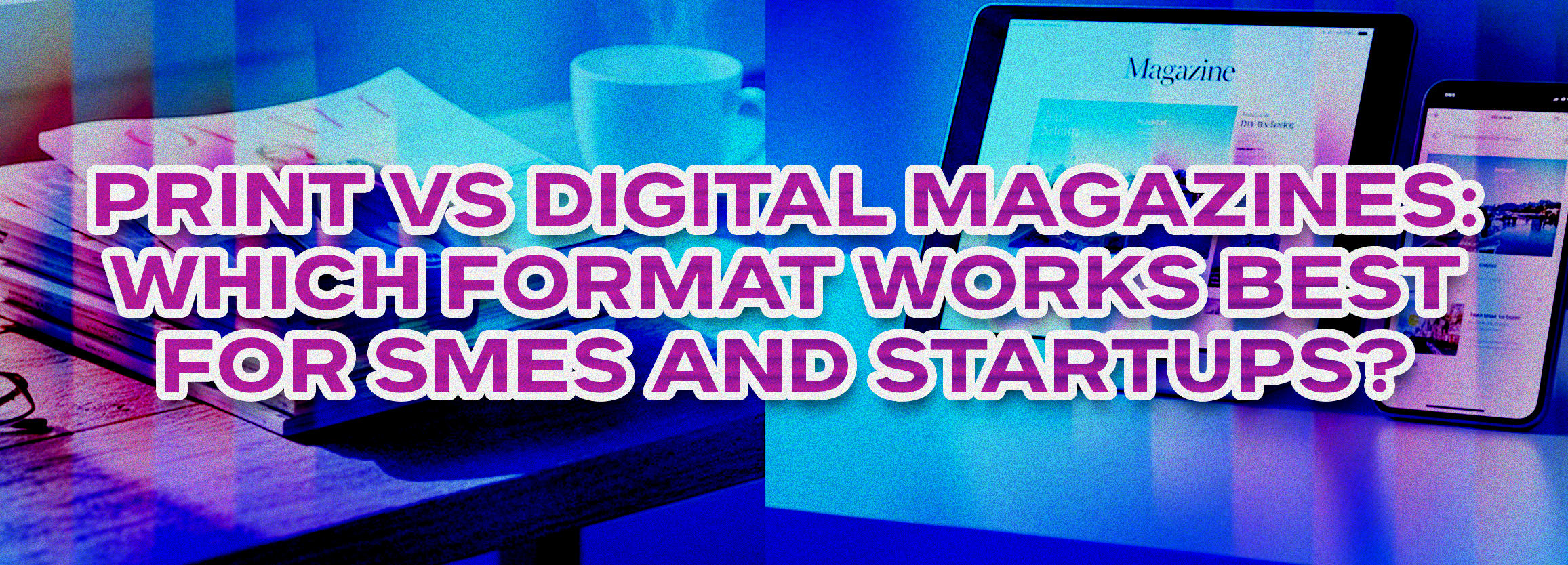
Magazines remain a powerful tool for businesses to connect with their audience, build authority, and showcase expertise. But for SMEs, startups, and publishers, the big question is: print vs digital magazines, on which one should invest?
In this article, we break down the key differences, benefits, and best practices for both formats. By the end, you’ll know which approach aligns with your budget, goals, and audience preferences.
For general insights on publishing trends, see Forbes: The State of Print and Digital Media.
What Is a Print Magazine?
A print magazine is a physical publication that uses high-quality paper, ink, and professional layout design to deliver content. Print magazines are tangible, collectible, and often carry a sense of prestige that digital formats cannot match.
- Layout consistency across spreads
- High-resolution images and typography
- Paper selection and finishes (matte, gloss, or textured)
- Brand colors and visual identity
Use cases for SMEs and startups:
- Building credibility and trust with local customers
- Niche marketing or targeted campaigns
- Event or subscription-based distribution
For more on design best practices, read our article on Best Magazine Layout Design Practices.
What Is a Digital Magazine?
A digital magazine is an online publication delivered through PDFs, flipbooks, web apps, or mobile-friendly formats. Digital magazines allow for interactive content, clickable links, and multimedia integration.
- Mobile-first responsive layouts
- Interactive features (videos, animations, hyperlinks)
- Optimized file sizes for fast loading
- Accessibility for all readers
Benefits of digital magazines:
- Broader reach across geographies
- Real-time updates and analytics
- Environmentally friendly and cost-efficient
For tips on digital magazine strategies, check HubSpot: Digital Publishing Trends.
Print vs Digital Magazines: Key Differences
How do costs compare?
- Print: Higher upfront production costs (printing, shipping, materials)
- Digital: Lower production costs, no printing, instant distribution
Which format reaches more readers?
- Print: Ideal for local or niche audiences, trade shows, events
- Digital: Global reach with email campaigns, social sharing, and website integration
Which design offers more flexibility?
- Print: Fixed layouts, limited interactivity, tactile experience
- Digital: Fully interactive layouts, multimedia, adaptable to devices
What about timelines and sustainability?
- Print: Longer production and delivery timelines, uses physical resources
- Digital: Instant updates, minimal environmental impact
For further research, see Statista: Digital Media Consumption.
Benefits of Print Magazines for SMEs & Startups
- Brand Credibility: Physical publications convey professionalism and trustworthiness
- Tangibility: Readers can hold, share, and keep your magazine
- Niche Targeting: Perfect for local businesses, subscriptions, or specialty topics
Benefits of Digital Magazines for SMEs & Startups
- Scalability: Easily share with thousands of readers globally
- Analytics & Tracking: Measure engagement, clicks, and downloads
- Cost Efficiency: No printing or shipping expenses, faster ROI
Learn how digital publications can drive engagement in our article How Custom Magazine Design Increases Engagement.
Which Format Should You Choose?
Choosing between print and digital depends on:
- Audience Preferences: Do they value tactile experiences or digital convenience?
- Budget: Can your business afford printing costs or benefit from digital scalability?
- Goals: Are you building local authority, generating leads, or reaching a global audience?
Pro Tip: Many SMEs and startups benefit from a hybrid approach — a smaller print run for prestige and events, combined with a digital version for mass reach and interactivity.
For insights on hybrid publishing, see Adobe: Print & Digital Publishing Strategies.
Why Professional Magazine Design Matters
- Consistent Branding: Ensures fonts, colors, and layouts align with your identity
- Visual Storytelling: Engaging layouts make content easy to consume
- Multi-Format Expertise: Designers optimize for both print and digital for maximum impact
By investing in professional magazine design, your business can stand out from competitors and leave a lasting impression on readers.
Conclusion
There’s no one-size-fits-all answer when choosing between print and digital magazines. SMEs and startups should evaluate their goals, budget, and audience before deciding.
A strategic approach — potentially using both formats — paired with professional magazine design can maximize brand visibility, engagement, and credibility.
For general industry insights, visit Forbes: Print vs Digital Marketing.