

First Lane Marg, Kumaripati-5,
Lalitpur Metropolitan City, Nepal




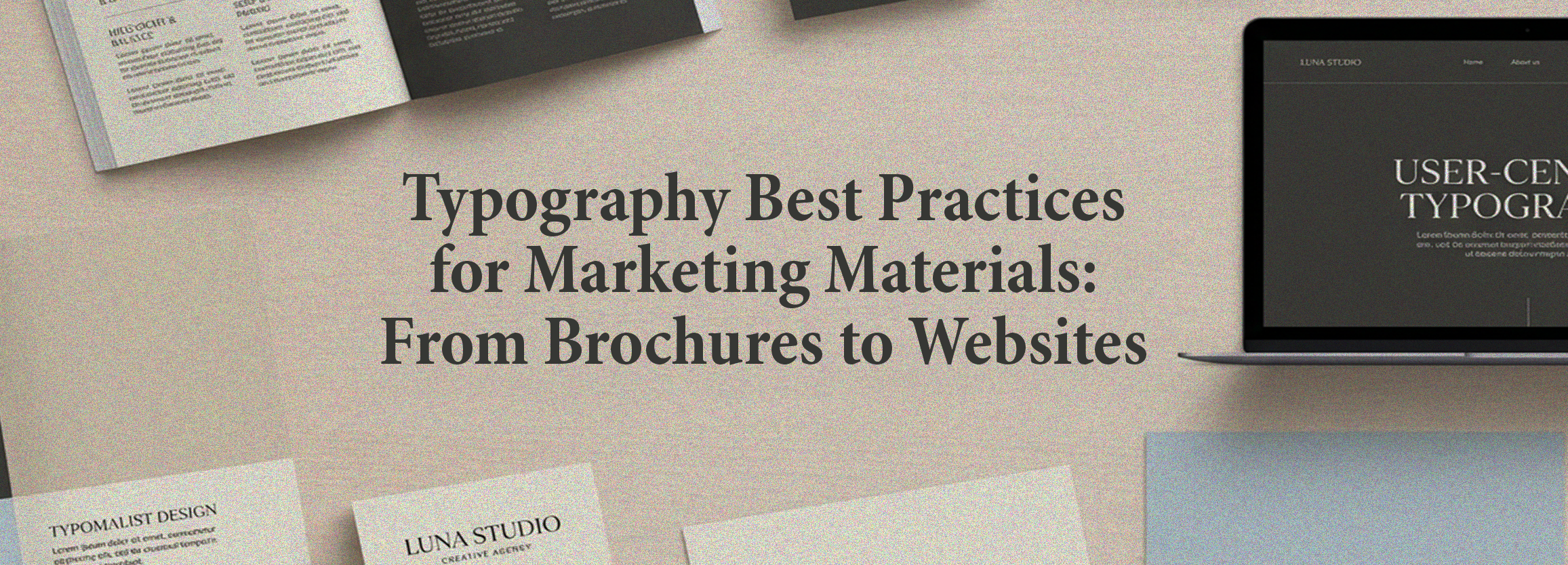
Typography practices for marketing materials play a decisive role in how your audience perceives your brand. Whether it’s a brochure handed to a potential client or a website they browse at midnight, the way your text looks shapes their first impression. Clear, strategic, and well-designed typography strengthens your brand message and guides readers through your marketing materials effortlessly.
For many small business owners, marketers, entrepreneurs, and independent publishers, typography may seem like a small detail—but in reality, it’s one of the most powerful design elements. At Global Digital Nepal, we use strategic typography across print and digital projects to elevate communication, improve readability, and build brand authority.
In this guide, we break down proven typography practices for marketing materials, including brochures, websites, ads, landing pages, and social media graphics.
Typography goes far beyond choosing beautiful fonts. It affects how your audience reads, understands, and remembers your message.
When used consistently, typography helps establish a recognizable brand personality. For example:
The right combination shapes how your brand is perceived across print materials and websites.
Good typography creates a visual path, helping readers move naturally from the headline to the body copy, call-to-action, or offer.
Legible, well-spaced typography improves reading comfort and lowers friction—crucial for both marketing materials and web design.
For more on UX and website development, explore our services: Global Digital Services.
Font choice is the foundation of marketing typography. Your fonts must:
For example, a modern tech business may choose clean sans-serif fonts, while a traditional brand may prefer serif fonts that convey trust.
Tip: Avoid using more than two to three fonts across all materials.
Hierarchy determines the importance of text elements. It tells the reader:
Your hierarchy might include:
This ensures your brochures, web pages, and marketing assets remain reader-friendly and visually structured.
Font pairing means selecting fonts that complement each other. For instance:
Consistency across all marketing materials—from brochures to websites—reinforces brand recognition.
Even the best fonts fail if they’re hard to read. When designing marketing materials, consider:
Poor readability damages brand trust and reduces conversions.
Color affects moods, emotions, and visibility. When selecting typography colors:
For advanced color strategies, reference design theory and color resources as needed.
Typography works best when paired with strong layout design. This includes:
Whether it’s a brochure or website, thoughtful layouts improve clarity and visual flow. See examples in our portfolio: Global Digital Portfolio.
Brochure design, flyers, business cards, and posters require special attention.
Tips for Print Typography:
Printed branding materials depend heavily on typography to deliver visual impact and professionalism.
Typography plays an even more important role online due to screens, resolutions, and user behavior.
Key practices include:
Typography directly affects website conversions—an area where Global Digital Nepal’s web development services consistently deliver measurable results.
From brochures to Instagram posts to landing pages, typography must stay consistent to build a strong brand identity. Use:
Consistency increases brand recall and strengthens credibility.
Mistakes can distort your message and harm your brand. The most common include:
By avoiding these, your marketing materials remain polished and professional.
Print design relies on precise typography. Brochures especially must balance visuals and text elegantly.
Printed materials often determine offline brand perception—so typography becomes even more crucial.
Here’s how typography enhances online marketing:
Clean text encourages readers to stay longer on the website.
Clear typography guides visitors toward CTAs like “Book a Meeting,” “Contact Us,” or “Download a Brochure.”
Readable text improves engagement metrics, which indirectly supports search ranking.
Consistent typography ensures your brand is recognizable across platforms.
From brochures to websites, typography ensures clarity and persuasion.
Typography influences how users read, interpret, and act on your message.
Professional design reflects professionalism in the business.
Typography is more than design—it’s communication. When done right, it amplifies your message, strengthens your brand, and improves marketing performance across brochures, websites, and print materials. Whether you’re building a brand from scratch or refining your existing materials, typography deserves careful attention.
If you want your marketing visuals, brochures, and websites to look more professional, compelling, and conversion-friendly, Global Digital Nepal is here to help.
Contact us today to elevate your brand’s design and marketing impact.